
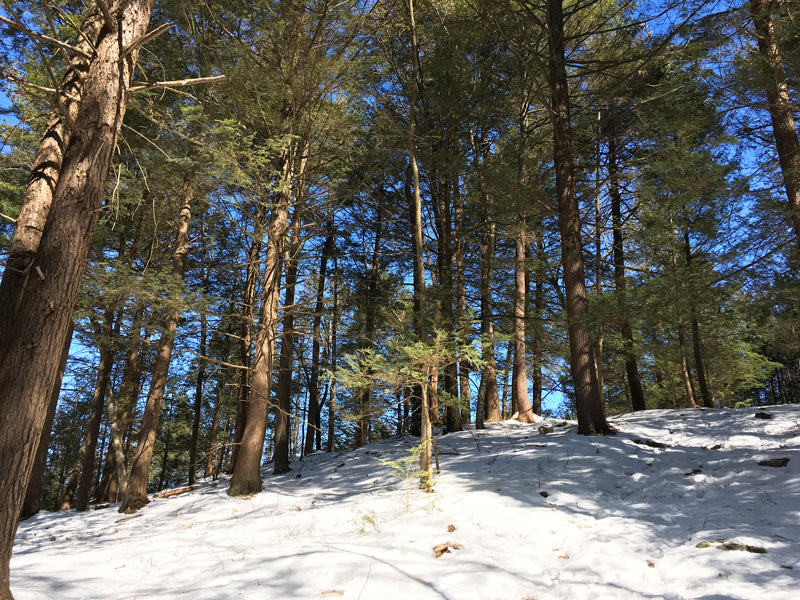
Eastern White Pine Wood
-
-
Characteristics of Eastern White Pine Wood
- Color: Creamy white to yellow
- Source: Eastern White Pine Tree (Pinus stobus L.)
- Durability: 380 lbf (1,700 N) on the Janka scale
- Cost: $2 per board foot
- Common Uses: Furniture, Art, Construction, Crates
What Color is Eastern White Pine Wood?
What are the Common Uses of Eastern White Pine Wood?
During colonial times, eastern white pine wood was used for virtually everything, from building ships through homes, barns, fences, and furniture. Given that it is one of the stronger and more shock-resistant woods, it’s a good choice when sturdiness is the primary concern– most studded walls are constructed using pine 2” x 4”s.
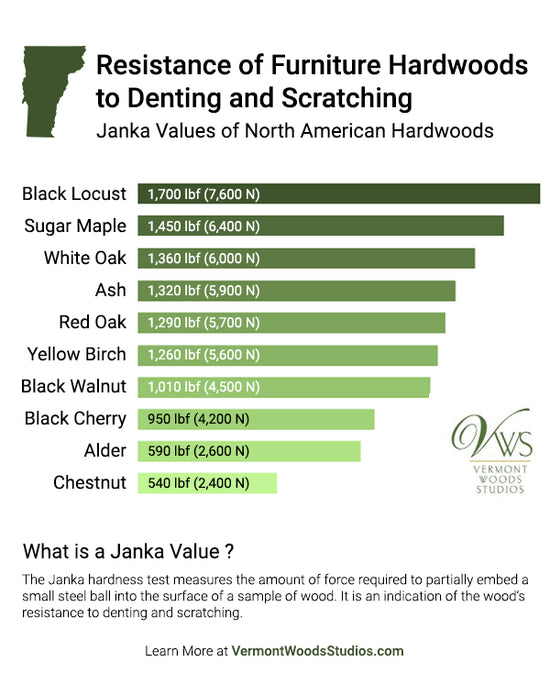
That said, it also tends to show wear quicker than other types of wood. It is easily dinged up and scuffed. For this reason, most craftsmen concerned about a piece remaining in heirloom condition for generations will select an alternate variety like cherry or maple
What Does the Grain Pattern of Eastern White Pine Look Like?
Eastern white pine wood is straight-grained with an even medium texture. It also tends to feature quite a few dark knots, as pine trees grow branches down almost the entire trunk of the tree.
Is Eastern White Pine a Hardwood or Softwood?
Under a classic definition, eastern white pine is a softwood, which means it comes from a gymnosperm tree. Other softwoods include fir and cedar. This is as opposed to hardwoods which come from dicot trees, such as a broadleaf variety.
This can be a bit confusing because most people equate hard vs softwood with the resilience of the wood, when it merely explains the group of trees the wood came from. In the case of eastern white pine, it is a softwood, and it is easily scuffed or nicked, but it’s also fairly strong.
Where Does Eastern White Pine Wood Come From?
The wood comes from the eastern white pine tree, also known by the scientific name Pinus stobus L.
How Big Are Eastern White Pine Trees?
The wood comes from the eastern white pine tree, also known by the scientific name Pinus stobus L.
How Can I Tell if the Furniture I have is Eastern White Pine Wood?
Generally speaking, eastern white pine wood is one of the least expensive wood types, so it would be a bit odd for someone to try to pass another type of wood off as pine. Pine furniture is usually easy to spot due to the frequency of dark knots as shown below.
On the flip side, because it’s not expensive and it takes stain very well, there’s more potential for someone to attempt to pass a piece of pine furniture off as another variety, particularly if the manufacturer took care to select boards without the characteristic knots. The only way to be totally certain that you’re purchasing a specific wood type is to purchase it from a reputable retailer or craftsman.
Can Eastern White Pine Wood Go Outside?
Eastern white pine wood has a few characteristics that could make it a good choice for outdoor furniture. First, it doesn’t shrink and swell as much as other varieties do when there are temperature or humidity variations. It’s also lightweight, so that would mean furniture could easily be moved for seasonal shifts. However, at best, it’s only moderately rot-resistant, and sometimes not even that. Moreover, its susceptibility to damage would likely leave any homeowner with immense amounts of maintenance in order to keep their furniture looking new.
At Vermont Woods Studios, we strongly advise customers not to put any natural wood furniture outdoors, even some of the more robust varieties. As an alternative, our Polywood collection gives the look and feel of natural wood, but is crafted with a special recycled high-density plastic. This way, it’s strong enough to stand up to the elements, is maintenance-free, and is guaranteed to last a lifetime.
Is Eastern White Pine Wood Eco-friendly? Are Eastern White Pine Trees Endangered?
The International Union for Conservation of Nature evaluates various plant and animal species to determine their risk of extinction and breaks them into three broad categories; Extinct, Threatened, and Lower Risk. Within the Lower Risk Category, there are three sub-categories; Near-Threatened, Conservation Dependent, and Least Concern. Eastern White Pine Trees fall into the very lowest category—Least Concern.
Read More on the Blog
-
Hardwood Furniture Buyer's Guide, Part 1
Read MoreThis hardwood dining table, buffet and chair set is made of American black cherry wood. Mortise and tenon joints are used as well as dovetails in the drawers of the buffet.
-
5 Wood Sourcing Certifications
Read MoreSustainable wood sourcing is essential to protecting forests and conserving resources for future generations. By understanding what each designation stands for, you can make informed decisions when purchasing.
-
FSC Certified Wood: Everything You Need to Know
Read MoreSupporters of the sustainable American-made furniture movement prefer the use of domestic wood over the use of imported FSC certified wood.
-
Wood Furniture Buyer's Guide
Read MoreShopping online for high quality wood furniture requires some research. After all, fine furniture is a big investment.
-
5 Exotic Hardwoods to Avoid & Why
Read MoreWood is generally an earth friendly material because it is renewable, meaning it grows back and isn't finite like oil, metals, or even rock. But not all species of wood are inherently sustainable.
Other Types of Wood Species
-
Cherry Wood
More About Cherry -
Walnut Wood
More About Walnut -
Birch Wood
More About Birch -
Maple Wood
More About Maple
