
Fine Wood Furniture Care Instructions
How do I care for my Vermont Furniture Designs furniture?
The furniture crafted by Vermont Furniture Designs benefits from being oiled once or twice a year. Furniture in drier climates may have to be oiled more than furniture in more humid climates. Vermont Woods Studios recommends using a natural danish linseed oil for re-oiling the furniture though any quality linseed oil should work. Tung oil may be applied on Maple furniture only.
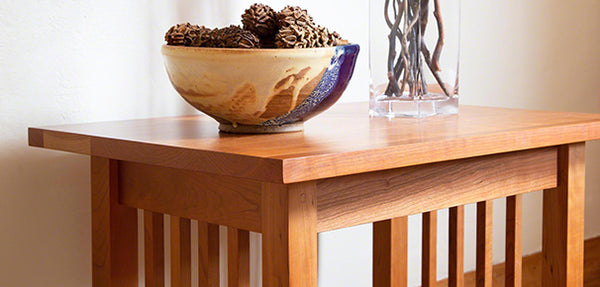
To oil your furniture, first gently wipe off any dust or debris with a lint free cloth, lightly moistened with water. Using a soft, clean rag, wipe a thin coat of oil onto the furniture, gently rubbing it in until dry. If any bleed-back from oiling dries on the surface, smooth it out by rubbing fine (0000) steel wool in the direction of the grain over the rough area.
A liquid satin wax may also be applied to the furniture in these collections, if desired. The wax helps to keep the oil from drying out and lends an additional rich soft satin lustre to the wood. The wax and oil products we recommend are totally compatible with each other and can be applied in any combination over the life of your furniture.
Fire Hazard Warning: All rags that have come into contact with this type of oil MUST be thoroughly wet and stored under water until disposed of outside your home. Oil-soaked rags are a serious fire hazard.
How do I care for my Maple Corner Woodworks furniture?
Cherry and Walnut furniture crafted by Maple Corner Woodworks benefits from being oiled once or twice a year. Furniture in drier climates may have to be oiled more than furniture in more humid climates. Vermont Woods Studios recommends using a natural danish linseed oil for re-oiling the furniture.
For maple furniture as well as case tops and table tops in Cherry or Walnut can be maintained by gently wiping off any dust or debris with a lightly moistened cloth. They can also be oiled periodically.
To oil your furniture, first gently wipe off any dust or debris from the piece with a lint free cloth, lightly moistened with water. Using a soft, clean rag, wipe a thin coat of oil onto the piece, gently rubbing it in until the surface is dry. If any bleed-back from oiling dries on the surface, smooth it out by rubbing fine (0000) steel wool in the direction of the grain over the rough area. Do not use steel wool on the tops of case pieces, tables or maple furniture.
How do I care for my Lyndon and Copeland furniture?
Lyndon and Copeland Furniture both use eco-friendly, low-sheen lacquers that are low maintenance and easy to clean. Dust and small messes should be wiped off with a clean, lint-free cloth that is lightly moistened to allow the dust to cling to the cloth, rather than rub on and dull the surface. For grease and grime, a mild soap and some warm water will work best; avoid commercial cleaning products, as they can leave a residue on your furniture. Never soak the surface of your wood furniture; a small amount of water or water and soap will yield the best results.
General Furniture Care Tips
Natural Wood Characteristics
Each piece of furniture is made from natural solid hardwood and just as the trees in our forests are not identical, each individual piece of furniture has its own unique markings. It is not uncommon to find several grain variations in the same piece of furniture.
Grain variations in solid wood furniture can include the use of sapwood and heartwood, pitch pockets, and mineral deposits.These natural markings have absolutely no effect on the furnitures’ durability or structural integrity.
Cheaper furniture that is mass-produced is often made of low quality wood or plastic veneers that have undergone a multi-step chemical process of bleaching, texturizing and staining in order to mask these natural characteristics of wood. At Vermont Woods Studios, we prefer the real thing.
Knots and other characteristics are much like the nubs you find in such fine fabrics as silk and linen, true indications of genuine quality.
Water & Humidity
Water can be very damaging to wood. If possible, never allow your wood furniture to get wet or soaked. Use coasters, pads, cloths or runners to protect against spills and water rings and always keep your wood furniture indoors. If your furniture does get wet or damaged, see our damage section for tips to reduce the effects of water.
Wood is also very sensitive to changes in relative humidity. As the weather changes, so does the relative humidity in your home and in the moisture content of the wood in your furniture. This means that furniture is constantly expanding and contracting; keeping your furniture in moderate heat and humidity conditions, however, can great reduce the chances of surface distortion. For best results, use a humidifier in winter and an air conditioner in summer and keep your furniture away from direct heat sources.
Dusting
To dust your furniture, use a clean, lint-free, soft cotton cloth. Moisten the cloth very lightly with water to allow the dust to adhere but not so much as to leave the surface of your table wet. Dust using gentle, oval motions along the grain of the wood. Turn or fold the dust cloth as soon as dirt is visible on any section.
An old t-shirt, cotton diaper, cheesecloth, dishtowel, piece of flannel or chamois will all suffice so long as they are free of buttons, zippers, snaps or thick seams that could scratch furniture. Do not use a dust cloth that has hanging threads or unraveling edges, which could catch on wood slivers, molding, knobs or other loose pieces.
Feather dusters are not recommended as dust is abrasive and feather quills could scratch the furniture. Improper or infrequent dusting may cause a buildup of dust that is difficult to remove and could ultimately dull the table.
Polishing Products
Although it is not necessary, you may feel free to use commercial polishing products on furniture that has a lacquer finish. Furniture made by Lyndon and Copeland typically has a lacquer finish. If you are unsure, look at the construction details on your furniture’s product page. Furniture with an oil finish has special care recommendations.
If you choose to use a polishing product on lacquered furniture, be sure to use the same type of polish consistently. If you interchange oil-based and wax-based polishes, your furniture finish may appear cloudy or streaky.
Avoid Direct Sunlight
The ultraviolet rays of the sun can damage a finish and bleach the wood underneath after prolonged exposure. Avoid putting your furniture outside or near a window that receives hours of strong, direct sunlight daily. Use window shades, drapes or blinds to protect furniture from the sun during the day. Table cloths and doilies can protect surfaces from direct sun temporarily, but they will not completely stop damage from occurring.
Moderate, indirect sunlight, however, can beautifully ripen your table, so make sure the entire surface is exposed evenly. Occasionally move lamps, doilies and other objects so the wood ripens uniformly.
Sunlight and Cherry Wood
New cherry wood is light in color, similar to maple. When it reaches maturity, however, cherry furniture darkens to a rich red/brown hue.
It is important to know the natural darkening of cherry wood is an oxidation process, catalyzed by sunlight. For this reason, objects placed on the surfaces of new cherry furniture will leave lighter areas when they are removed. For the first three months it is best to not place objects on cherry surfaces for prolonged periods of time. To correct these light areas, leave the spot uncovered and the color will “catch up” to the darker surroundings.
Avoid Heat, Chemical Exposure, Sharp Objects
Heat
Placing hot items on furniture can cause a chemical change in the finish that results in white rings or spots. For placing warm dishes and other hot objects on your wood surfaces, we recommend the use of hot mats and coasters.
Further, if you use a laptop computer at your desk or table, be sure it does not overheat. This could damage the computer as well as the finish on the desk. In extreme cases, prolonged over exposure to intense heat from a laptop computer could cause the desktop wood to split or crack. This would not be covered by our lifetime guarantee. Read more about heat exposure to wood furniture on our blog.
Chemicals
Keep solvents such as nail polish remover, alcohol and paint thinner away from wood furniture because they can harm the finish. Alcohol is contained in colognes, perfumes and medications as well as in wine, beer and liquor. When cleaning, never use products that contain ammonia as it will harm your finish.
Several household objects have the potential to stain wooden surfaces if left on for too long. Plastic table cloths, appliance covers, placemats, toys, brightly colored felt, and plant and flower nectar, can all potentially damage table surfaces. Fingerprints, perspiration and body oils can also harm a finish over time, especially on chairs.
Regular care of your furniture, including keeping strong chemicals away from surfaces and clearing them of household objects regularly, especially those that contain plastic, will prolong the life of your table and preserve your lifetime guarantee.
Sharp Objects
Avoid deep, difficult to repair scratches on your furniture by using felt bottoms on lamps and decorative objects and lifting, not sliding, objects when moving them. Firm writing on a finished surface can also cause indentations on the finish and wood, so be cautious when writing at your desk or table.
Products We Recommend
- Tried & True Danish Oil Finish
- General Finishes Satin Finishing Wax
- The Real Milk Paint Company Pure Tung Oil
- Lyndon Furniture Wood Cleaner